
Amazon Hazmat Review: SDS, FHSA Signal Words and Child-Resistant Packaging
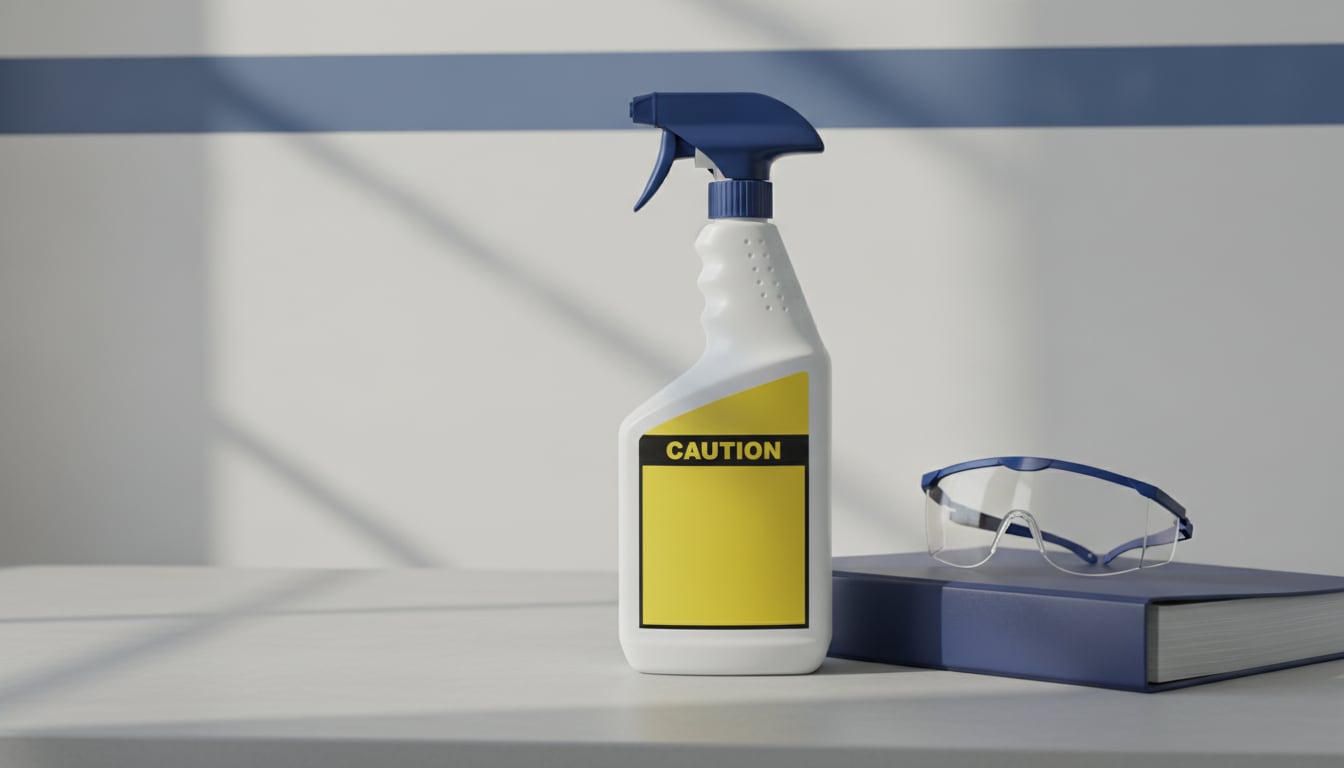
How Amazon's dangerous-goods review works for aerosols, flammables and corrosives, what 16 CFR 1500.121 requires on the label, and which products need CRP.
Household chemicals fail on Amazon in two different places, and sellers often confuse them. The first is the listing: the words on the detail page. The second is the product itself: whether it can be shipped, stored and sold at all, which depends on paperwork the listing never shows a shopper. Aerosols, flammable liquids, corrosive drain openers, lighter fluid and paint thinner all live in the second category, and a listing for any of them that goes dark is usually waiting on a document rather than a copy change.
This post covers Amazon's dangerous-goods review and the Safety Data Sheet it asks for, the cautionary labelling the Federal Hazardous Substances Act requires on the container, and the Poison Prevention Packaging Act thresholds that decide which products need a child-resistant closure.
Dangerous-goods review and the SDS
Every listing carries a hazmat declaration attribute (the field Amazon calls the dangerous-goods regulation declaration), and that field, together with the product type and the words in the listing, decides whether the ASIN goes through dangerous-goods review. Aerosols go through it whatever the product type, because a pressurised container is UN1950 under the transport rules. Flammable liquids, corrosives and anything with a signal word in the copy follow.
Amazon's dangerous goods identification guide describes the process. In practice: the listing is blocked, any FBA inventory is stranded, and you are asked to upload a Safety Data Sheet or, for products that are not hazardous, an exemption sheet. Seller guides commonly cite a window of 14 business days to respond before the listing stays blocked. The SDS has to be in the OSHA Hazard Communication Standard format under 29 CFR 1910.1200. Note that the standard was revised (HCS 2024), with compliance dates of 19 May 2026 for substances and 19 November 2027 for mixtures, so an SDS your supplier wrote years ago may be in a superseded format.
Two points sellers miss:
- If you import the product, you are the HCS importer. The chemical manufacturer or importer prepares the SDS. A seller bringing a cleaning concentrate in from overseas cannot point at the factory; the duty to have a correct SDS is theirs.
- The DOT classification decides FBA eligibility. Section 14 of the SDS carries the transport classification under 49 CFR 172.101, and the limited-quantity determination under 172.315 decides whether the product can move as a limited quantity. The ORM-D marking that many older labels still carry ended on 31 December 2020. Amazon reads the classification to decide which fulfillment centres, if any, will take the product.
Keep the SDS, the DOT classification and the limited-quantity determination together as one document set per SKU. They answer the same question from three directions.
Cautionary labelling under the FHSA
A household product that is a hazardous substance must carry cautionary labelling under the Federal Hazardous Substances Act, with the content set out in 16 CFR 1500.121. The required elements:
- A signal word. DANGER for products that are extremely flammable, corrosive or highly toxic, with POISON added for highly toxic products. WARNING or CAUTION for all other hazardous substances.
- An affirmative statement of the principal hazard or hazards. "Flammable", "Extremely flammable", "Contents under pressure", "Causes severe burns", "Vapor harmful", "Harmful if swallowed".
- Precautionary statements describing how to avoid the hazard.
- First-aid instructions.
- "Keep out of the reach of children", or an approved variant for products not intended to be kept within children's reach.
- Storage and handling instructions where relevant.
These go on the principal display panel, or on another panel with a reference from the front. The elements are not optional in combination: a label that says "Flammable" in bold but has no signal word, or carries DANGER with no first-aid statement, is incomplete.
Sellers in this category also need to know where the FHSA stops. An EPA-registered pesticide is labelled under 40 CFR 156, which has its own signal-word scheme tied to toxicity category, and the EPA-accepted label controls. A disinfectant spray does not get an FHSA panel bolted on; its cautionary text is whatever EPA accepted. Our post on pesticidal claims and EPA registration covers that regime. Everything that is not a pesticide, from drain opener to charcoal starter to contact cement, is FHSA territory.
Amazon reads the label images. A vision check of the label for a flammable or corrosive product that finds no signal word, no hazard statement or no "Keep out of the reach of children" is a finding, and the fix is to re-shoot the label image with the compliant panel visible, or, if the panel does not exist, to fix the physical label first.
Child-resistant packaging: the PPPA list
The Poison Prevention Packaging Act requires certain household substances to be sold in child-resistant packaging, and the list with its concentration thresholds is at 16 CFR 1700.14. The entries that matter most for Amazon sellers in this category:
- Liquid drain openers and oven cleaners with sodium or potassium hydroxide, at 10% or more dry or 2% or more in other forms.
- Furniture polish with 10% or more petroleum distillates.
- Kindling and illuminating preparations with 10% or more petroleum distillates: lighter fluid, lamp oil, kerosene.
- Turpentine at 10% or more.
- Methanol at 4% or more, including fuel and windshield-washer concentrate.
- Ethylene glycol at 10% or more (antifreeze).
- Sulfuric acid at 10% or more.
- Methyl salicylate (wintergreen oil) liquids over 5%.
- Paint solvents with 10% or more benzene, toluene, xylene or petroleum distillates.
- Glue removers containing more than 500 mg of acetonitrile.
- Low-viscosity hydrocarbons at 10% or more.
The packaging has to be tested to the CPSC protocols in 16 CFR 1700.15 and 1700.20. The document to hold is the test report or the packaging supplier's certification, per closure and container combination.
Pesticides are not PPPA items. They have their own rule: under 40 CFR 157.22, a pesticide for residential use that meets any toxicity category I criterion must be in child-resistant packaging tested to the same CPSC protocols. A residential product labelled DANGER or POISON is the cue.
One entry deserves its own sentence. Under 16 CFR 1500.17(a), a liquid drain cleaner with 10% or more sodium or potassium hydroxide that is not in child-resistant packaging is a banned hazardous substance. Not mislabelled; banned. The same section bans carbon tetrachloride in household products and lead-cored candle wicks.
If a listing describes one of these products and never mentions child-resistant packaging, a reviewer has no way to tell whether it complies. Say it: "child-resistant cap" in a bullet and visible on the label image. Our rules for this category raise a finding when a product in one of the listed categories has no CRP cue anywhere in the listing, and the fix is both a statement and a document.
Ingredients that end the conversation
Some ingredients make the product unsellable to consumers regardless of labelling. The ones that appear in listing scans:
- Methylene chloride (dichloromethane): banned in consumer paint strippers under TSCA section 6 since 2019 and in all consumer uses under the May 2024 rule.
- Trichloroethylene and perchloroethylene: consumer prohibitions under the December 2024 TSCA rules.
- Carbon tetrachloride: banned hazardous substance under 16 CFR 1500.17.
- HFC-134a as a propellant: prohibited in consumer aerosols manufactured or imported from 1 January 2025 under the AIM Act rules at 40 CFR 84 subpart B.
- PCBTF, p-dichlorobenzene and nonylphenol ethoxylate surfactants in the California product categories named in 17 CCR 94509(m).
A listing that names any of these as an ingredient is a do-not-sell finding. A "methylene chloride-free" comparison is fine, as long as the substance is named only in that form.
The document set for a hazardous household chemical
For each SKU that is an aerosol, flammable, corrosive or on the PPPA list:
- Safety Data Sheet in current HCS format, from the manufacturer or from you as importer.
- DOT classification and limited-quantity determination.
- Label artwork showing the FHSA panel: signal word, hazard statement, precautions, first aid, "Keep out of the reach of children".
- CRP test report or supplier certification where 16 CFR 1700.14 or 40 CFR 157.22 applies.
- For products sold into California, the CARB VOC compliance statement and date code. Our post on VOC and green claims covers what the date code is for.
The listing side is to make sure the copy agrees with the documents: the hazmat declaration set, the signal word visible, the CRP stated. Verid8 tracks the document set per listing for the household and garden chemicals category, reads the label images for the FHSA elements, flags products that appear to need child-resistant packaging without saying so, and marks the ingredients that cannot be sold at all.
Frequently asked questions
Why is my cleaning product stuck in Amazon hazmat review?
Amazon routes anything flagged as potentially hazardous, including aerosols, flammable liquids, corrosives and products with a hazmat declaration, into dangerous-goods review. The listing stays blocked and FBA inventory stays stranded until you upload a Safety Data Sheet or an exemption sheet, and the DOT classification on that sheet decides whether FBA will accept the product at all.
What signal word does my household chemical need?
Under 16 CFR 1500.121, DANGER for products that are extremely flammable, corrosive or highly toxic, with POISON added for highly toxic ones, and WARNING or CAUTION for other hazardous substances. The label also needs a statement of the principal hazards, precautionary and first-aid statements, and Keep out of the reach of children.
Which household products legally require child-resistant packaging?
16 CFR 1700.14 lists them with thresholds, including drain openers with 10% or more sodium or potassium hydroxide, furniture polish with 10% or more petroleum distillates, lighter fluid, turpentine at 10% or more, methanol at 4% or more, ethylene glycol at 10% or more and methyl salicylate liquids over 5%. Residential pesticides meeting toxicity category I criteria need CRP under 40 CFR 157.22.
Does an EPA-registered pesticide follow the FHSA signal-word rules?
No. Registered pesticides are labelled under 40 CFR 156, which has its own signal-word scheme tied to toxicity category, and the EPA-accepted label controls. The FHSA rules in 16 CFR 1500.121 apply to household chemicals that are not pesticides.
This article is general information for Amazon sellers, not legal advice. Regulations and Amazon policy change; verify requirements against the primary sources cited, and consult a qualified attorney about your specific situation.